Call centres sit at the heart of customer experience. But rising expectations, high interaction volumes, and pressure to reduce costs can stretch even the best teams. That is where call centre AI steps in as a powerful ally, not a replacement for human agents. Understanding why AI call center solutions matter for omnichannel CX can help businesses align technology with customer expectations, while learning how AI is transforming call centers shows the real-world impact on efficiency, personalization, and agent productivity.
Modern call centre AI systems rely heavily on advanced technology infrastructure to manage large volumes of interactions simultaneously. By leveraging distributed computing networks, call centres can maintain speed and reliability even during peak periods. Similarly, integrating supercomputing service platforms allows AI systems to analyze complex patterns, predict customer needs, and reduce wait times effectively.
The success of AI in call centres also depends on intelligent marketing strategies that feed relevant data into the system. Using customer behavior insights ensures AI can anticipate client preferences and improve engagement. At the same time, implementing digital marketing strategies helps businesses align automated responses with promotional campaigns, providing a seamless experience across channels.
On the financial side, AI-enabled call centres can benefit from insights into operational efficiency and budget optimization. By applying financial planning guidance, companies can make data-driven decisions that balance cost reduction with high-quality service delivery. Combining these technology, marketing, and financial insights allows call centre AI to not only handle inquiries efficiently but also provide a more personalized and proactive experience for every customer.
Top 10 Call Centre AI Solutions for Modern Contact Centres
The world of customer service is evolving rapidly, and leveraging call centre AI is no longer optional—it’s essential. Here’s a curated list of the top 10 call centre AI solutions, highlighting their unique capabilities, integrations, and how they enhance customer support operations.
1. Bright Pattern: AI-Powered Contact Center Platform
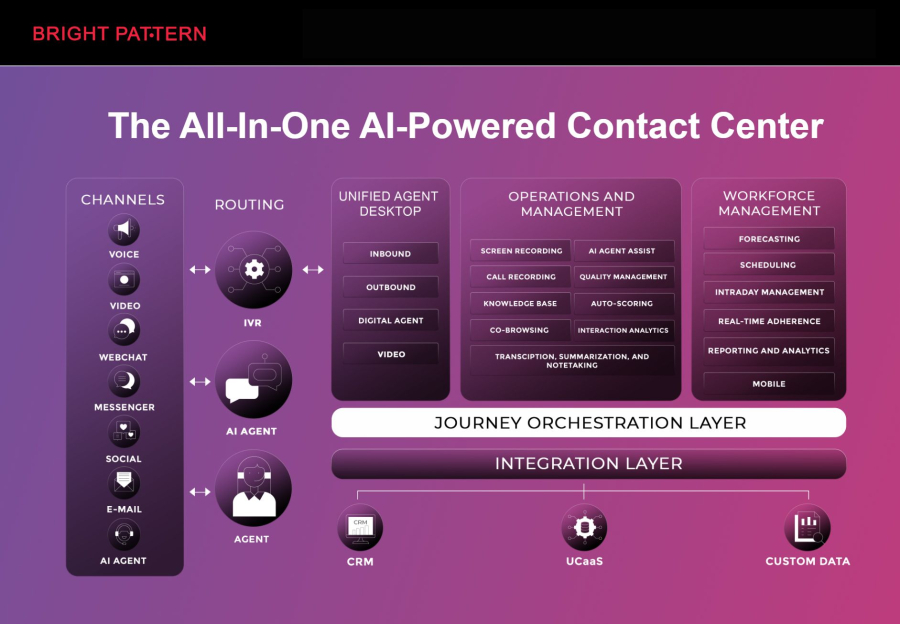
Bright Pattern leads the market with a cloud-based contact center platform designed for seamless AI integration. It helps businesses deliver personalized, efficient, and intelligent customer experiences across multiple channels.
Key Features:
- AI-driven routing and automation for faster response times
- Natural language understanding for improved customer interactions
- Integration with CRM systems and enterprise software
- Real-time analytics and insights for continuous optimization
- Omnichannel support including voice, chat, email, and social media
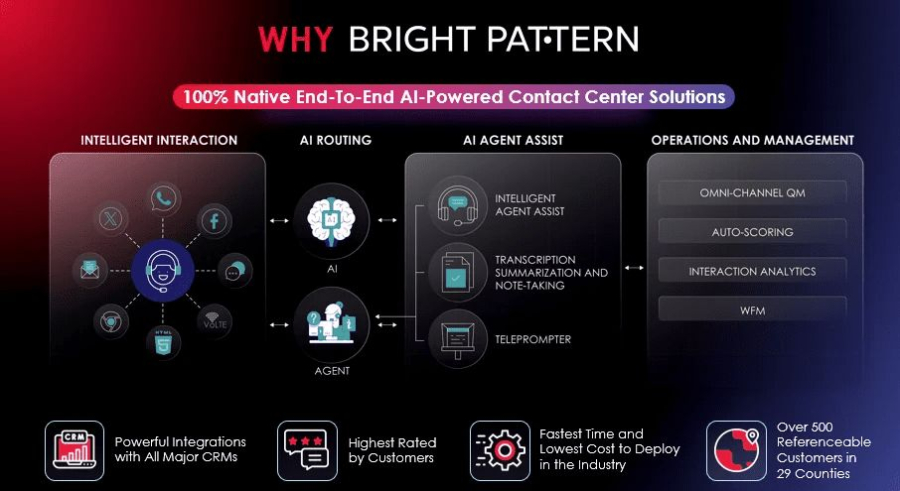
Bright Pattern’s AI contact center solutions enable organizations to reduce operational costs while increasing customer satisfaction. Its flexibility makes it ideal for businesses of all sizes seeking to implement scalable, intelligent customer service.
2. Genesys Cloud AI Contact Solutions
Genesys offers advanced AI capabilities embedded in its cloud contact center platform, enabling predictive routing, automated self-service, and voicebots that improve first-call resolution.
3. Five9 Intelligent Cloud Contact Center
Five9 provides an AI-enhanced platform with smart IVR, real-time agent guidance, and predictive analytics to boost agent efficiency and customer satisfaction.
4. Cisco Webex Contact Center with AI
Cisco Webex integrates AI-driven analytics and conversational AI to streamline customer interactions, enhance agent performance, and automate repetitive tasks.
5. NICE inContact AI Contact Center
NICE inContact offers an AI-enabled solution focusing on omnichannel customer engagement, sentiment analysis, and intelligent virtual assistants to support live agents.
6. Talkdesk AI-Powered Customer Experience
Talkdesk’s platform leverages AI to automate routine tasks, provide predictive insights, and enable agents to focus on complex customer issues.
7. RingCentral AI Contact Center
RingCentral incorporates AI for smart routing, automated workflows, and detailed analytics, helping contact centers deliver consistent experiences across channels.
8. 8x8 AI Contact Center Solutions
8x8 combines AI-driven analytics and automated engagement tools to improve service quality, reduce wait times, and optimize workforce management.
9. Avaya OneCloud AI Contact Center
Avaya’s solution leverages AI for intelligent self-service, advanced routing, and actionable insights, improving both agent performance and customer satisfaction.
10. Zendesk AI-Enhanced Customer Support
Zendesk integrates AI to provide automated ticketing, predictive support recommendations, and virtual assistance, enabling contact centers to respond faster and more accurately.
What Is Call Centre AI?
Call centre AIrefers to the use of artificial intelligence technologies to assist, automate, and improve customer service interactions handled through phone, chat, messaging, and other support channels.
It typically includes capabilities such as:
- Virtual agents and chatbots that handle routine questions.
- AI-powered call routing that matches customers to the best agent.
- Real-time agent assistance that suggests answers while agents are on calls or chats.
- Speech analytics that turns conversations into actionable insights.
- Quality monitoring and coaching recommendations driven by AI.
- Workforce forecasting and scheduling optimisation.
The goal is not to remove the human element, but toamplify the strengths of your teamwhile eliminating repetitive, time-consuming tasks.
Key Components of Call Centre AI
1. Virtual Agents and Intelligent Chatbots
Virtual agents use natural language processing to understand customer questions in everyday language. They can respond via voice or text and handle a wide range of simple to moderately complex tasks such as:
- Answering FAQs about products, policies, or billing.
- Resetting passwords or unlocking accounts.
- Checking order status and delivery updates.
- Scheduling, rescheduling, or cancelling appointments.
- Guiding customers through basic troubleshooting steps.
When a request becomes too complex, virtual agents canseamlessly hand overto a human agent, passing along the context so the customer does not have to repeat themselves.
2. AI-Powered Routing and Triage
Traditional call routing relies on simple rules such as menu selections or basic skills lists. AI-powered routing goes further by using data to decide where each interaction will be handled most effectively.
It can consider factors such as:
- Customer history and previous issues.
- Detected sentiment and urgency.
- Agent skills, experience, and current workload.
- Predicted handling time and resolution rate.
The result is thatthe right customer reaches the right agent at the right time, increasing first contact resolution and overall satisfaction.
3. Real-Time Agent Assistance
Real-time AI assistance acts like a supportive co-pilot during live interactions. As agents talk or chat with customers, AI can:
- Recommend knowledge base articles and next best actions.
- Suggest compliant wording for sensitive topics.
- Auto-generate call summaries and case notes.
- Flag opportunities for cross-sell or upsell when appropriate.
This means agents spend more time engaging with customers and less time searching for information or updating records.
4. Speech and Text Analytics
Every call, chat, or message contains valuable insight. Speech and text analytics tools use AI to analyse these interactions at scale, helping you to:
- Identify recurring issues and product pain points.
- Track customer sentiment and emotional tone over time.
- Spot phrases related to churn risk or dissatisfaction.
- Measure script adherence and compliance indicators.
- Discover training opportunities based on real conversations.
Instead of relying on small samples, you gain adata-backed, holistic viewof what customers are experiencing and how your team responds.
5. AI in Workforce Management
Workforce management is critical to call centre performance. AI can refine planning and scheduling by:
- Forecasting inbound volume based on historical patterns and external factors.
- Optimising schedules to balance coverage, service levels, and agent preferences.
- Highlighting when to use more automation versus human handling.
This leads to smoother operations, fewer staffing surprises, and more consistent customer experiences.
Benefits of Call Centre AI for Your Organisation
1. Faster Response Times and Shorter Waits
Customers rarely enjoy waiting on hold. With AI handling routine queries and helping triage complex ones, more customers are served faster. Virtual agents provideinstant answers 24/7, while intelligent routing reduces transfers and misdirected calls.
The impact:
- Lower average speed of answer.
- Reduced abandonment rates.
- Higher customer satisfaction for time-sensitive issues.
2. Consistent, High-Quality Customer Experiences
AI encourages consistent service by providing recommended responses, workflows, and knowledge content at the point of need. Even new or less experienced agents can perform at a higher level when AI suggests how to handle situations that might otherwise challenge them.
Customers benefit from:
- Clear, accurate information on the first attempt.
- Fewer transfers and escalations.
- More personalised interactions informed by their history and preferences.
3. Empowered Agents and Reduced Burnout
When AI takes over repetitive tasks, agents can focus on the interactions that truly require human empathy and problem solving. Real-time assistance relieves pressure by surfacing the right answers faster and reducing after-call work.
This often leads to:
- Higher job satisfaction and lower frustration.
- Shorter training curves for new hires.
- More time for meaningful, relationship-building conversations.
4. Lower Operational Costs and Greater Efficiency
Automation does not just speed up service, it also optimises how resources are used. By routing interactions more intelligently and automating parts of the workflow, you can handle more volume without a proportional increase in headcount.
Examples of efficiency gains include:
- Deflecting simple enquiries to self-service or virtual agents.
- Reducing average handling time with better guidance and auto-completed notes.
- Improving first contact resolution, leading to fewer repeat calls.
5. Rich Insights for Continuous Improvement
AI turns your contact centre into a powerful feedback engine. By analysing voice and text interactions, you uncover patterns that may be difficult to spot manually.
These insights support:
- Product and service enhancements based on real customer feedback.
- Better training programs grounded in actual conversations.
- Data-informed decisions about policies, scripts, and processes.
Call Centre AI vs Traditional Call Centres
| Aspect | Traditional Call Centre | AI-Enhanced Call Centre |
| Availability | Primarily business hours, limited after-hours support. | 24/7 assistance through virtual agents and self-service. |
| Routing | Menu-based and manual transfers. | Data-driven routing based on skills, intent, and sentiment. |
| Agent Support | Manual search for knowledge and guidelines. | Real-time recommendations, prompts, and auto-summaries. |
| Insight Generation | Limited to sampled calls and manual reviews. | Automated analysis of large volumes of calls and chats. |
| Scalability | Requires proportional increase in staff as volume grows. | Automation absorbs spikes, limiting the need for large hiring waves. |
| Customer Experience | Inconsistent, depends heavily on individual agent skill and availability. | More consistent, personalised, and responsive. |
High-Impact Use Cases for Call Centre AI
1. Handling High-Volume, Low-Complexity Queries
Questions like “What is my order status?” or “How do I reset my password?” are essential but repetitive. AI is ideal for these because it can provide instant answers at scale while freeing human agents to focus on edge cases and emotionally charged situations.
2. Customer Onboarding and Guided Walkthroughs
AI can guide new customers step-by-step as they set up accounts, activate services, or learn how to use a product. By automating this journey, you make onboarding smoother while still offering the option to transfer to a human when needed.
3. Proactive Outreach and Notifications
Instead of waiting for customers to contact you, AI can help trigger proactive messages based on defined events, such as upcoming renewals, detected issues, or delivery updates. This proactive approach reduces inbound volume and builds trust.
4. Real-Time Compliance and Risk Monitoring
In regulated industries, adherence to scripts and disclosures is critical. AI can monitor conversations in real time and gently prompt agents when required statements are missing or when conversations drift into sensitive territory.
5. Customer Retention and Churn Prevention
By detecting emotional cues, language patterns, and behaviours associated with dissatisfaction, AI can flag at-risk customers so agents can respond with targeted retention offers or personalised support.
Implementing Call Centre AI: A Practical Roadmap
Step 1: Clarify Objectives and Success Metrics
Before selecting tools, define what success looks like. Common objectives include:
- Reducing average handling time.
- Improving first contact resolution.
- Lowering cost per contact.
- Boosting customer satisfaction scores.
- Increasing agent engagement and retention.
Clear goals help you choose the right AI capabilities and measure impact over time.
Step 2: Start with High-Value, Low-Risk Use Cases
Instead of trying to transform everything at once, begin with areas where AI can add value quickly without disrupting critical processes. Typical starting points include:
- Virtual agents for FAQs and simple transactions.
- Analytics on recorded calls to identify common issues.
- Real-time knowledge suggestions to support agents during chats.
This phased approach builds confidence and internal buy-in as you demonstrate results.
Step 3: Integrate with Core Systems
For AI to be truly effective, it needs access to customer and product data. Plan integrations with systems such as:
- Customer relationship management platforms.
- Ticketing and case management tools.
- Knowledge bases and content repositories.
Well-integrated AI can personalise responses, automate updates, and maintain a complete view of each customer interaction.
Step 4: Involve Agents Early and Often
Agents are on the front line, and their feedback is invaluable. Involving them in testing and design helps you create AI experiences that truly support their work rather than getting in the way.
Consider:
- Running pilot programs with small agent groups.
- Collecting feedback on usability and suggestions.
- Highlighting how AI reduces workload and improves outcomes.
Step 5: Train, Monitor, and Continuously Improve
AI systems improve with quality data and ongoing tuning. Build a practice of:
- Reviewing misinterpreted queries and refining AI models.
- Updating virtual agent knowledge as products and policies change.
- Regularly assessing metrics to refine workflows and automation rules.
Continuous improvement ensures your AI remains aligned with evolving customer expectations and business goals.
Addressing Common Concerns About Call Centre AI
“Will AI replace our agents?”
In most implementations, AI augments rather than replaces human agents. It handles repetitive tasks and provides guidance, while humans focus on complex, emotional, or strategic conversations. Many organisations use AI to enhance job quality and support growth without constantly expanding headcount.
“Will customers accept AI interactions?”
Customers tend to valuespeed, clarity, and resolution. When AI is well designed, clearly labelled, and offers an easy path to a human agent, it is generally well received. Frustration typically arises when customers feel trapped in a loop or cannot reach a person if they need one. Balancing automation with human access is key.
“Is AI too complex or expensive for our size?”
While large enterprises were early adopters, AI tools are increasingly accessible to organisations of many sizes. Cloud-based solutions, modular capabilities, and pay-as-you-go models make it possible to start small and expand as benefits grow. Careful scoping, prioritisation, and phased deployment help control complexity and cost.
Future Trends in Call Centre AI
The capabilities of call centre AI continue to evolve. Trends that are gaining momentum include:
- More natural conversationsas language models improve and better understand context and intent.
- Omnichannel orchestrationwhere AI keeps track of a customer’s journey across phone, chat, email, and messaging.
- Deeper personalisationwith recommendations based on preferences, behaviour, and previous interactions.
- Advanced coaching and trainingthat provide tailored learning paths for agents based on their real performance.
By investing in AI now, you create a foundation that can adapt and grow as new capabilities become available.
Bringing It All Together
Call centre AI is not just a technology upgrade, it is a strategic shift in how you deliver service. By combining human empathy with intelligent automation, you can:
- Delight customers with faster, more personalised support.
- Empower agents with tools that make their work easier and more impactful.
- Unlock insights that guide smarter decisions across your organisation.
- Scale operations efficiently without sacrificing quality.
The most successful implementations start with clear goals, thoughtful design, and a focus on both customer and employee experience. With that foundation, call centre AI becomes a powerful driver of loyalty, growth, and long-term competitive advantage.
